
This post deals with a local economic issue. The Sault Ste. Marie International Bridge provides residents of Ontario convenient land access to the northern Michigan consumer and recreation market. It also provides Americans convenient land access to northern Ontario and its wilderness-based recreation. As a consequence the number bridge crossings is an indicator of economic vibrancy on both sides of the border.
Access to the northern Michigan consumer market supports a lower the cost of living for Canadians with access to the bridge. It also broadens the range and quality of consumer goods and services. New, improved products can be introduced in the domestic American before foreign markets. Canada is a foreign market.
Access to northern Ontario’s natural wilderness, supports a higher quality of life for Americans living within economic reach of t he bridge. For residents of mid west states the natural environment is under great pressure becoming increasingly scarce. Sports fishing and hunting uncongested trails are valued.
A number of principle factors and events that have impacted cross border travel over the last generation.
Over the last couple of generations, say from 1980, a number of external factors have influenced traffic across the bridge:
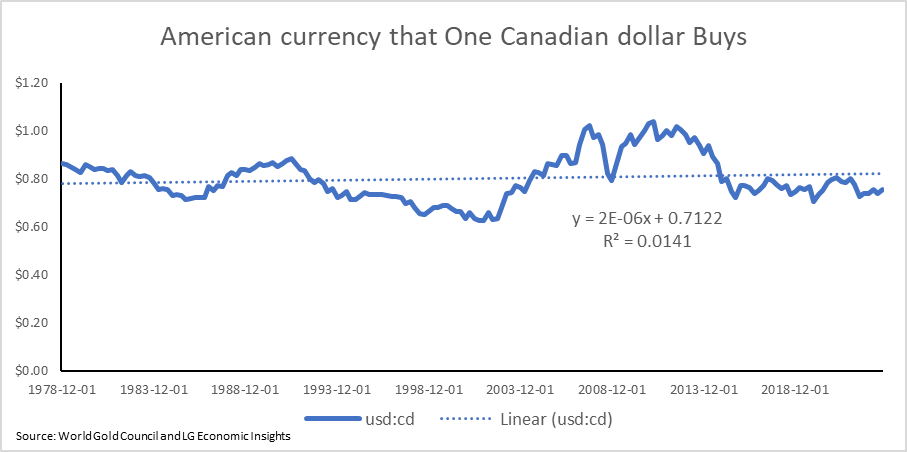
- The Canada : United States currency exchange rate. Figure 1 illustrates the Canadian dollars oscillation around its long-term average of US 81 cents. Canadian residents along the border are very knowledgeable about the currency fluctuations as it directly impacts the cost of gasoline (generally cheaper in the US usually because of lower gas taxes), clothing and dairy products to name the most visible. The relative value of the Canadian dollar is shown in Figure 1.
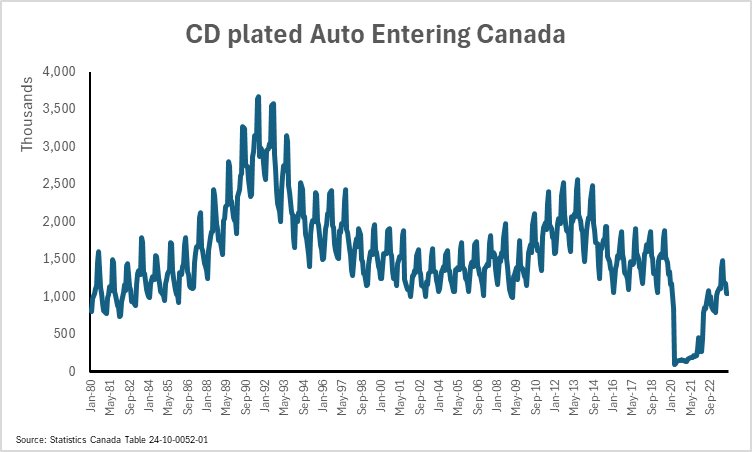
- The Canada-United States Free Trade Agreement in 1988 led to a visible increase of the number of Canadian-plated automobiles crossing the bridge to the US. See Figure 2.
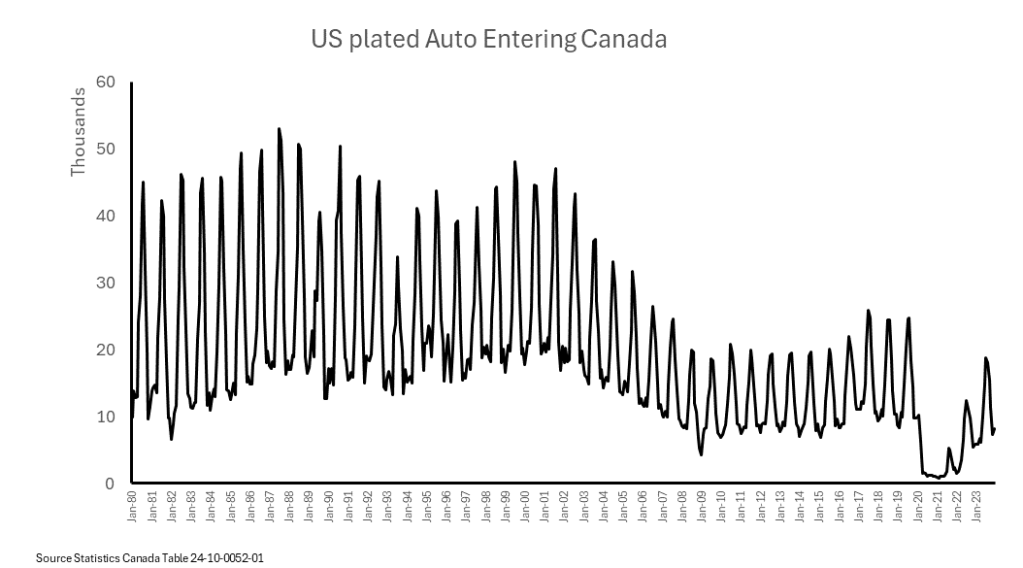
- The 9-11 Terrorist attack in New York City led to a tightening of American entry security making it slower to cross the border. American border guards enforced rules with greater thoroughness and strictness. Crossing the border became less welcoming and Canadian crossings fell. In addition American border guards enforced greater security on returning American citizens, expecting official US passports rather than simple proof of residency. As a direct result traffic fell on both sides of the bridge, taking a few years to show a hesitant movement back to pre-terrorism levels.
- The Global Financial Crisis of 2007 – 08 undermined consumed confidence in the western economic system. People hunkered down, having not fully recovered from the lingering uncertainty of the heightened 9-11 security measures, and now the near collapse of the global financial system. The recovery was very slow and very hesitant. As a consequence consumer consumption was reduced, and the bridge crossings fell further.
- The covid-19 pandemic hit in 2020 just as the economy was recovering to pre crisis levels. Then the economy was shut down and so was the bridge. One consequence of the pandemic was the disruption of global trade and supply chains leading to supply-side inflationary forces. Supply disruptions were further accentuated by the Russian invasion of Ukraine. Not co-incidentally e-commerce became more common. It was safer (not in-person), access to low Amazon-like prices with free (Prime) delivery. Further disincentive to cross the bridge to shop for American bargains.

 LG Economic Insights
Leave a comment