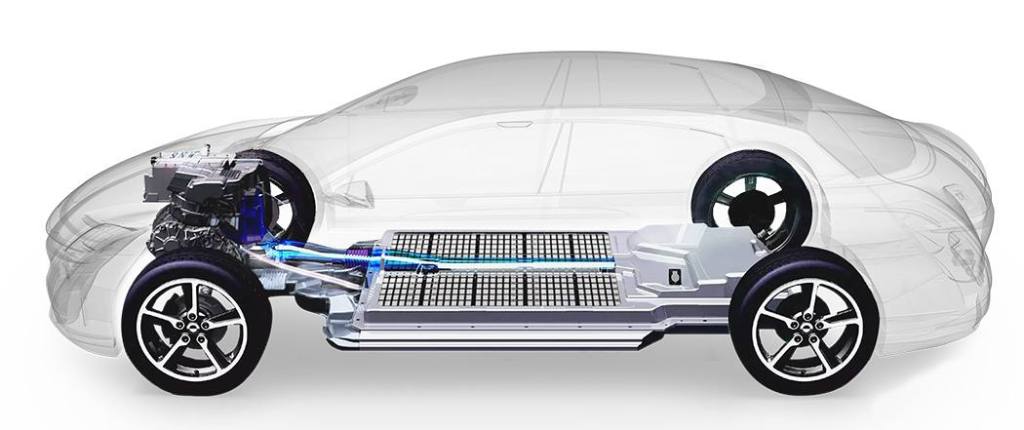
The emergence of the electric-battery powered vehicle is a sign of the continuation of the growth of the socio-economy described in earlier posts that described the unprecedented progress since the mid-nineteenth century. The torrid pace of socio-economic growth was described in a prior post. The modern drivers of this pace were discussed here. The direction of progress is unabated into at least the near future. Accelerated productivity can originate from hard science and engineering advances and from new business models. Often the hard science and new business models reinforce each other.
Joseph Schumpeter described one such path – Creative Destruction, an innovation sweeps away the Old. A simple example was the automobile that replaced the horse and buggy and replaced the business models and the supporting supply chain. A more recent example would be the internet displacing older technologies from paper newspapers to books replaced with electrons and paper letters with email. This is Creative Destruction at the macroeconomic scale commonly referred to as disruptive technology at the industry scale.
The emergence of the electric battery vehicle industry is a sign the direction of socio-economic growth continues. EVs are a disruptive technology mandated to replace gasoline fueled cars in the medium term. the new technology has the support of environmental groups (carbon emission targets) and governments (offering consumer and producer subsidies) to meet international targets.
EVs will change the present gasoline fuel vehicle production and maintenance chain. Half to two thirds of a barrel of crude oil is processed into engine fuel and the fuel distribution network is extensive in terms of infrastructure and employment. Gas engine mechanics may become obsolete. Battery technology is subject to intensive research and it is a working assumption of this post that the battery support system in the next decade will be very different than currently envisaged. And the innovations associated with self-driving vehicles hve not been mentioned in this post!
Even gasoline service station sites will re-envisioned and re-purposed. Block Buster provides as analogy. As of this post only one Block Buster site survives, in Bend Oregon and it is a tourist site. At its peak there were thousands of Block Buster locations. After bankruptcy the physical locations were repurposed and some continue to provide economic services but not retail video rentals.
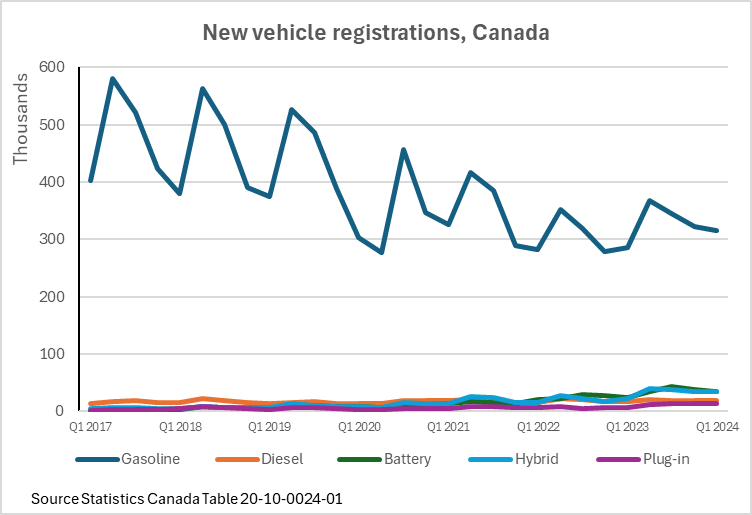
Registration of EVs in Canada is reported by Statistics Canada. EVs remain a tiny share of total vehicle registrations as of this writing. The national and provincial governments have policies to promote EVs including producer and consumer subsidies and ambitious carbon emission targets by the mid-2030s.
As illustrated in Figure 1 below the conversion from gas-fueled to battery-powered vehicles had barely started in Canada. As shown in Figure 2 the take-up of non-petroleum-based vehicles has been very slow. The mid-2030s target may be very ambitious but the socio-economy has proven it can adapt to rapid underlying economic change effectively, efficiently and it seems barely perceptively.

 LG Economic Insights
Leave a comment