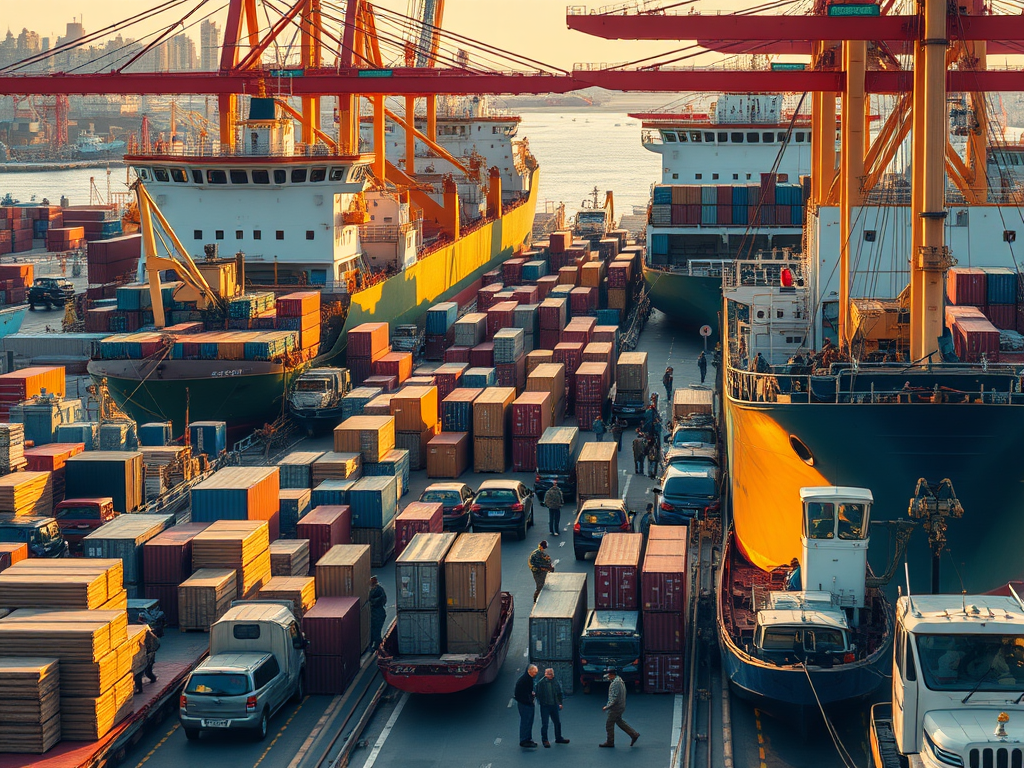
Merchandise exports have accounted for a disproportionate share of the world’s economic growth over the last century and a half, when the global socio-economy reached previously unimaginable heights. Global merchandise trade distributed this progress throughout the world.
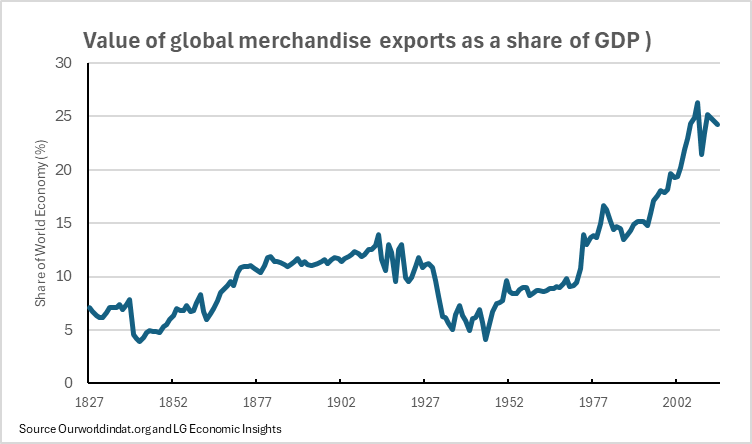
Figure 1 measures global merchandise exports as a proportion of the world’s gross domestic product (GDP). The Figure starts at the end of the Napoleonic Wars and the post-war economy that ended with the Panic of 1837. From 1837 to the outbreak of the First World War in 1914 global merchandise exports increased from 4 percent to 15 per cent of global GDP. Global trade reflected increased European demand for raw materials to support industrialization. Merchandise trade subsequently fell to 5 per cent of global GDP by the end of the Second World War. This fall reflected the uncertain business environment of the inter war years and supply disruptions during WW2. Merchandize exports reached 25 per cent of global GDP when the Global Financial Crisis erupted in 2007. This period is sometimes called the ‘golden age’ or the ‘great moderation’ . The available historic global data file supporting this post ends with 2014.
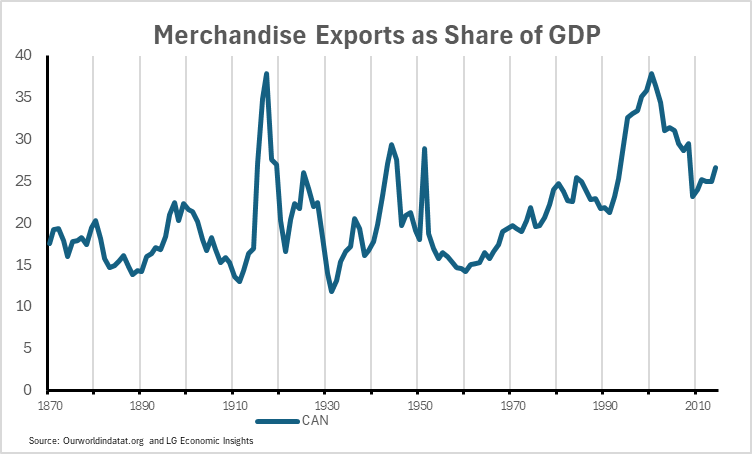
Canada is an example of the evolution of merchandise exports from the earliest days of European contact when French, Spanish and Portuguese fishers harvested fish from the Grand Banks off Newfoundland with a minimal footprint in the New World. Harvesting naval timbers along the maritime coast was followed by the development of the fur trade which penetrated deeper into the interior of the continent. The business model of the fur trade led to a significant footprint on the indigenous socio-economy as the resident population harvested the furs and developed the transportation infrastructure to deliver furs to European middlemen who managed the delivery of the furs to consumers. Canada’s merchandise exports have been focused on the export of natural resources in various levels of processing. Figure 2 shows the volatility of merchandise exports given its heavy concentration of commodities and world market pricing. In more recent decades manufactured products, for example automobiles, have accounted for a larger share.
(This post focuses on merchandise trade. International trade of services increased reflecting increased communications and transportation technologies. Measuring the value of international services is beyond the scope of this post.)
 LG Economic Insights
Leave a comment