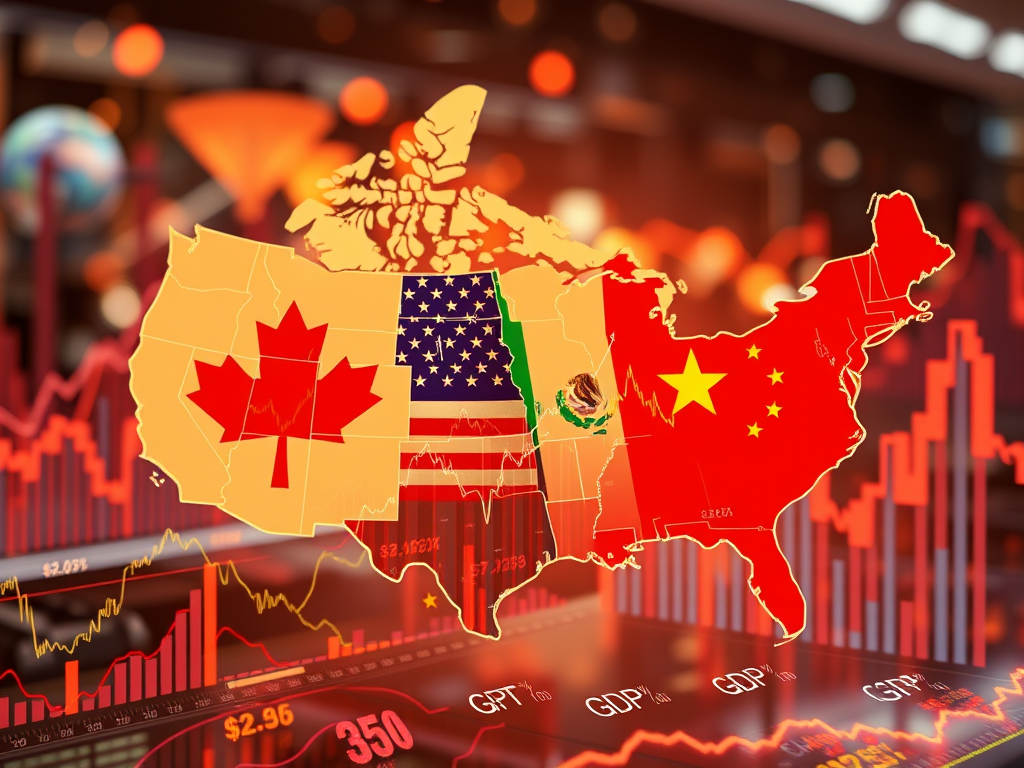
The 2025 tariff trade war initiated by the United States against its major trading partners Canada, Mexico and China could have a severe effect on the global economy. It is a direct attack on consumers in all four countries. The impact on GDP will be a focus for future posts.
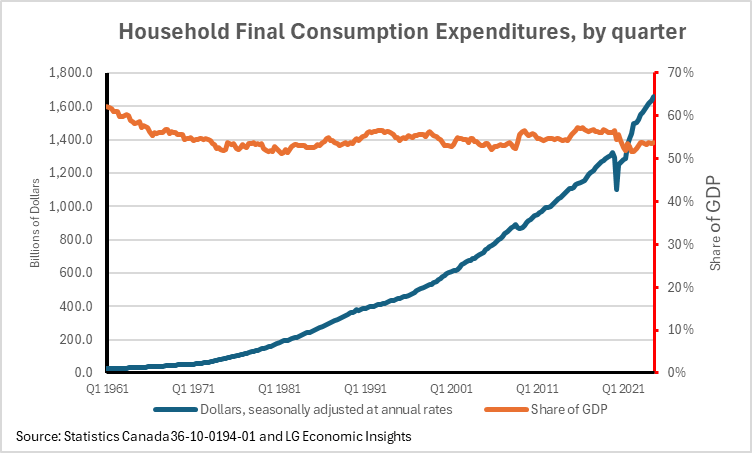
Household consumption accounts for over half of Canada’s economy since 1961. The consumer has held up through various economic shocks including the realignment of the global economy with the dissolution of European colonial system since World War 2. The transfer of economic and political power was highlighted by the 1973 oil crisis led by the Organization of Arab Petroleum Exporting Countries. The other shocks to the economy have been identified elsewhere in these posts.
Figure 1 below shows total household final consumption expenditures in current dollars (unadjusted for inflation) along the left axis, and the expenditures as a percentage of GDP along the rights axis. Since at least the mid 1960s consumer expenditures have averaged 55 per cent, stabilizing the economy through various shocks.
Similar data for the United States shows a slightly different trend – final consumption expenditures by households and Non-Profit Institutions Serving Households (NPISHs) rose from 60 percent of GDP to almost 70 percent. The American consumer is indeed the engine for the global economy. Figure 2 also shows that the European area was also similar to the Canadian experience. China was very different with consumer expenditures by households and NPISHs falling from American levels in the early 1960s to only 40 percent of GDP by 2010.
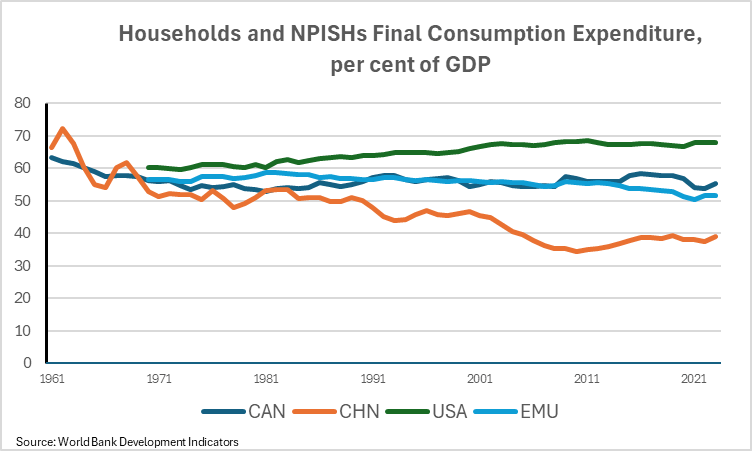
Figure 2

 LG Economic Insights
Leave a reply to Non-Profit Institutions Serving Households (NPISH) – LG Economic Insights Cancel reply