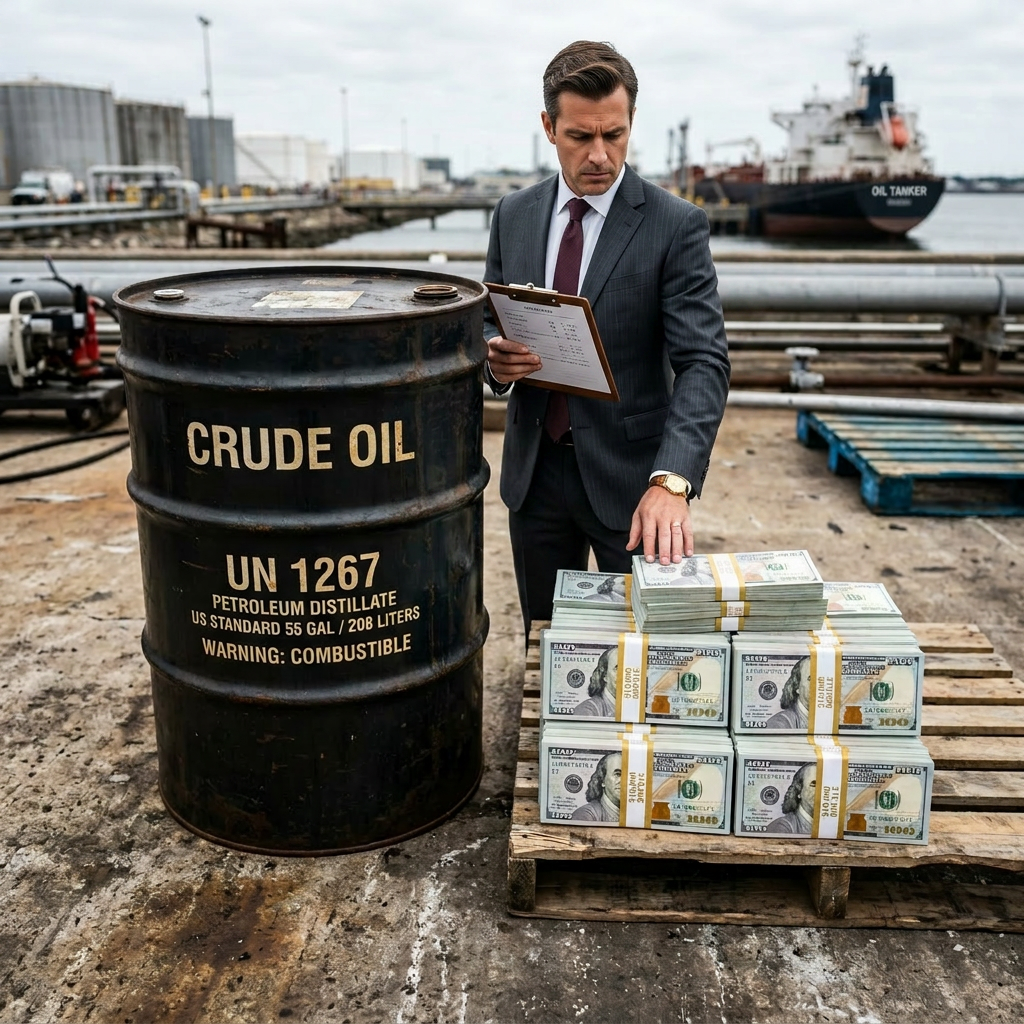
The petrodollar has been the financial lubricant and fuel of the modern global economy led by the United States since the early 1970s. In 2026, it is coming under serious stress. A breakdown of this system would have significant consequences for global growth.
The Bretton Woods Agreement, which stabilized the international currency system around the U.S. dollar, collapsed in 1971. Shortly after, the 1973 oil embargo led by OPEC triggered a quadrupling of oil prices, pushing the global economy into inflation and recession.
In response, the 1973-1974 U.S.–Saudi oil-for-dollars arrangement was engineered, giving rise to what became known as the petrodollar system. Its key elements included:
- Saudi Arabia’s commitment to price oil exclusively in U.S. dollars
- Reinvestment of surplus oil revenues (“petrodollars”) into U.S. Treasury securities and financial markets
- U.S. provision of military protection, security cooperation, and political support to Saudi Arabia
- Creation of joint U.S.–Saudi economic and military commissions (1974) to institutionalize cooperation
By ensuring oil was priced in dollars, the United States effectively:
- Replaced the gold standard with an oil-backed dollar system
- Forced all countries to hold dollars to purchase oil
- Ensured sustained global demand for U.S. Treasury bonds
This system underpinned low U.S. borrowing costs, enabled persistent federal deficits, and provided deep liquidity to American capital markets. These deficits, in turn, acted as a large-scale Keynesian stimulus, supporting both the U.S. economy and global demand through trade.
For Saudi Arabia, the arrangement delivered security guarantees, advanced military capabilities, and political backing in a volatile region.
For over half a century, the petrodollar system has been a central pillar of U.S. economic and geopolitical power.
Why the System Is Now Under Stress
Recent geopolitical and financial developments have exposed structural weaknesses in the system.
First, sanctions and geopolitical conflict are fragmenting oil markets. Countries such as Russia, Iran, and Venezuela, facing restrictions tied to the dollar-based financial system, have been forced to develop alternative pricing and payment mechanisms. Major importers, including China and India, are increasingly willing participants in these non-dollar transactions.
As a result, alternative payment systems outside the traditional dollar network have been tested and, to a degree, proven viable. This does not displace the dollar, but it weakens its exclusivity.
Second, the credibility of the U.S. security guarantee, central to the original bargain, has come into question. The ability and willingness of the United States to provide comprehensive military protection to key oil-producing states is no longer seen as absolute, particularly in a more multipolar and conflict-prone geopolitical environment.
Together, these trends signal a gradual shift away from a tightly integrated, dollar-centric oil market toward a more fragmented, multi-currency system.
Outlook
The American consumer has long been the primary engine of the global economy. For decades, the U.S. federal government has run large budget deficits, financed by foreign purchases of U.S. debt – recycled petrodollars. At their core, these deficits function as a powerful Keynesian stimulus, sustaining both domestic and global demand.
In 2026, the U.S. federal deficit is projected at approximately $1.9 trillion, with total federal debt approaching $39 trillion.
If the petrodollar system continues to erode, the implications are significant:
- Reduced automatic foreign demand for U.S. debt
- Higher interest rates on federal borrowing
- A contraction in U.S.-driven global demand
The result would likely be a substantial negative demand shock, i.e. a recession, to the global economy.


Leave a Reply