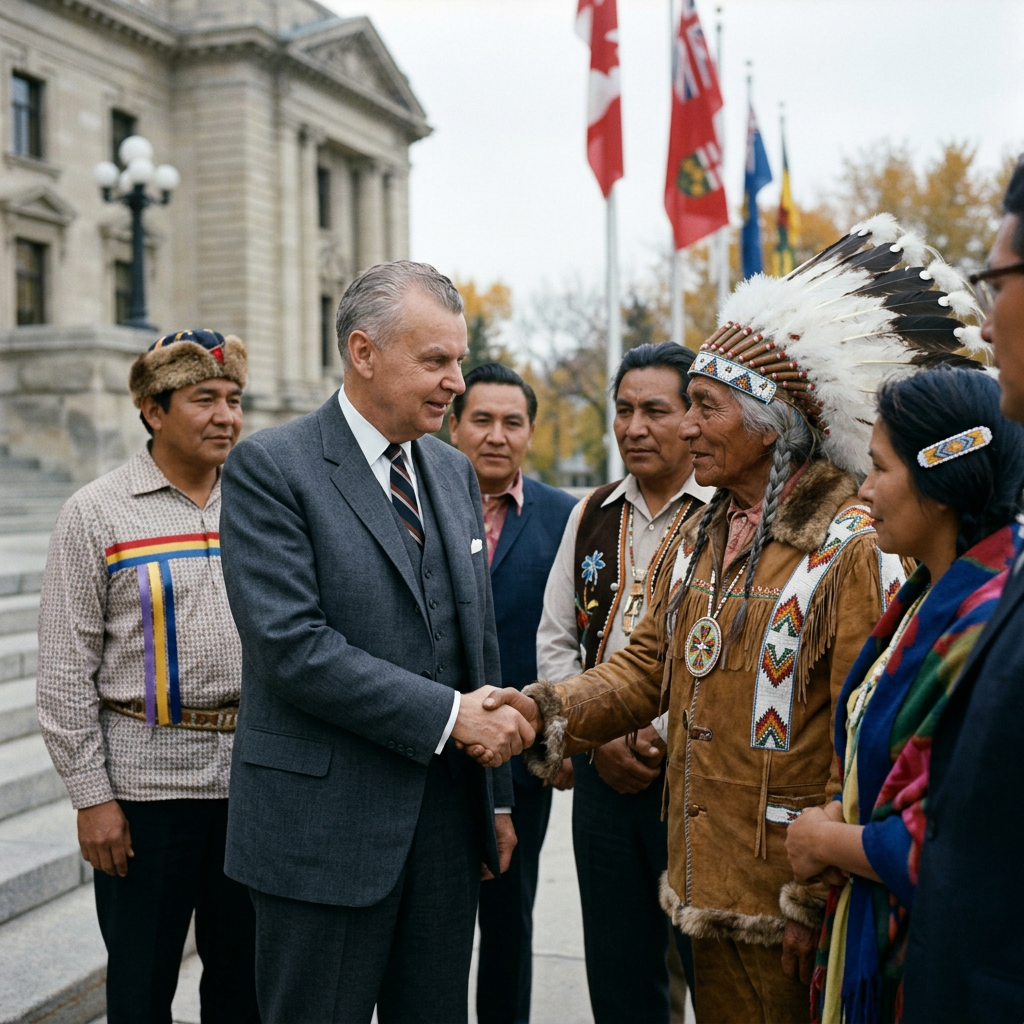
Diefenbaker’s Northern Vision was bold but structurally flawed: it lacked Indigenous partnership, realistic economics, governance capacity, and political durability. Modern Arctic strategy succeeds because it learned the lessons from earlier programs and reverses all of those weaknesses grounding development in Indigenous rights, climate science, community priorities, and long‑term national security.
Canada has tried to develop its North for generations. John Diefenbaker’s Northern Vision was perhaps the boldest early attempt promising roads, resource development, new communities and a stronger Canadian presence.
The vision fell short. But its greatest value today may be the lessons it left behind.
More importantly, Canada’s experience with northern development since Diefenbaker has repeatedly validated those lessons.
The first lessons is simple: vision must be matched by the capacity to deliver. Diefenbaker’s government lacked the institutional capacity, financial discipline and coordination needed to execute its ambitions. The Roads to Resources program, for example, grew from $30 million to roughly $100 million and several projects were never completed.
The second is that the North cannot be developed without its people. Indigenous peoples were largely excluded from Diefenbaker’s planning, at a time when Canada had no comprehensive land-claims framework.
Decades of experience have demonstrated the importance of Indigenous governments, modern treaties, development corporations and genuine partnership. Northern development must be built with northern and Indigenous communities, not imposed upon them.
The third lesson is that infrastructure does not automatically create an economy. Diefenbaker assumed that roads and resource development would draw people and investment north. Experience showed that climate, distance, markets and operating costs make the economics far more complicated.
The answer is not to build less, but to build strategically connecting communities, resources, energy, transportation and markets through economically defensible corridors.
There is also a lesson about political time. Diefenbaker’s strategy was too closely tied to one government. When his government fell, the integrated vision largely disappeared.
Northern development takes decades, not election cycles. A successful strategy must therefore survive changes in government.
Finally, Diefenbaker understood that northern development was about sovereignty. But sovereignty requires more than declaring the North Canadian. It requires the permanent capacity to operate there: ports, rail, roads, communications, energy and emergency services.
These lessons matter now.
The Canada–U.S. trade conflict is forcing Canada to reconsider its dependence on established southern markets and transportation corridors. That creates an opportunity to think differently about the North, not as a remote frontier, but as part of Canada’s future economic and strategic infrastructure.
A Port of Churchill-centred Arctic gateway could be one element of that vision.
But the history is clear: Canada does not need another grand northern announcement. It needs a northern strategy built on the lessons of experience: Indigenous partnership, institutional capacity, economic realism, strategic infrastructure and political continuity.
Diefenbaker showed us what happens when ambition outruns capacity.
The decades since have reinforced the lesson.
Will this time be different?
Leave a Reply